




In the retail sector, technology is the invisible support for every sale. When a payment terminal fails or the billing system slows down, the impact is immediate: queues grow, the store team becomes frustrated, and the customer ends up abandoning the purchase. In these scenarios, IT management ceases to be an office task and becomes a critical part of the logistics operation. This is where good ITSM software, such as SysAid, becomes essential.
Designed to respond to this urgency, SysAid ITSM allows support teams to keep pace with a physical store or e-commerce platform.
SysAid in retail: prioritizing revenue
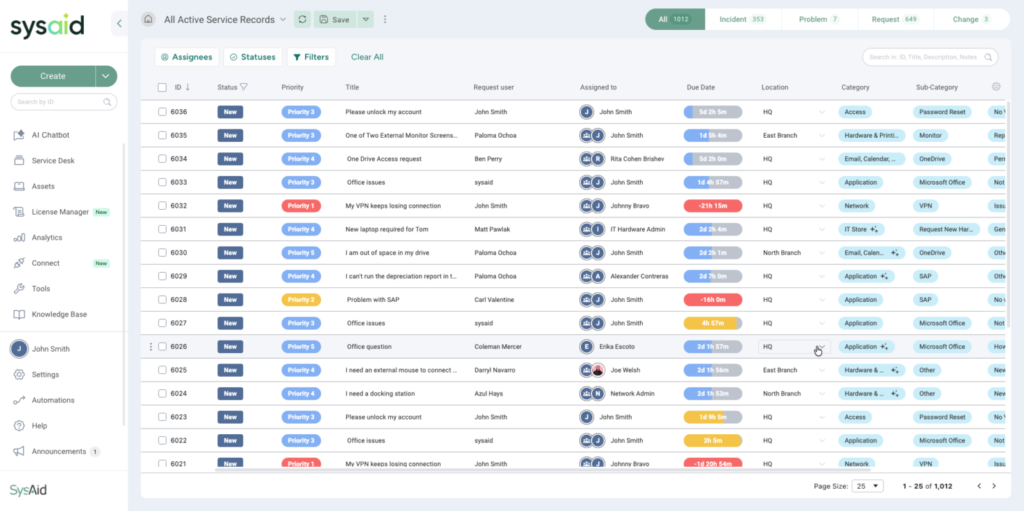
It's common for support to receive dozens of requests simultaneously. However, a request to change a printer at the head office doesn't have the same urgency as an error at the main store's POS system.
SysAid solves this by automating the workflow. The system identifies keywords in reported incidents, such as "communication error" or "payment failure," and places these tickets at the top of the list. By automatically assigning maximum priority, technical support knows exactly where to intervene first to prevent the store from experiencing downtime.
Real control over dispersed equipment
Managing hundreds of PDAs, scanners, tablets, and computers spread across various geographic locations is a logistical challenge. Without centralized visibility, it's easy to lose track of warranties or spend budget on unnecessary replacements.
With integrated asset inventory management (ITAM), SysAid allows you to know where each device is located and its health status. This visibility helps to:
- Plan hardware replacements before a critical failure occurs.
- Monitor the repair history of each piece of equipment.
- Manage maintenance contracts with external suppliers in a centralized manner.
Centralize services to simplify retail with SysAid
Store managers deal with multiple fronts daily. In addition to IT problems, they have to report air conditioning malfunctions, request new uniforms from HR, or order metalwork repairs. Having a different platform for each department is inefficient.
The concept of Enterprise Service Management (ESM) in SysAid allows you to create a single service portal. The store manager uses the same interface for any need. The system handles routing: technical issues go to IT, maintenance issues go to the Facilities team. This centralization saves time for those on the sales front and gives headquarters a clear view of the overall status of each point of sale.
Managing seasonal teams
During sales periods or at Christmas, the volume of temporary hires increases exponentially. Preparing system access and configuring emails for hundreds of new employees can overwhelm support for weeks.
SysAid simplifies this process by automating onboarding. When HR starts registering a new employee, the system can automatically trigger the creation of accounts and the assignment of permissions. This ensures that the employee is ready to work from the very first minute, without relying on slow manual processes.
SysAid in retail: data analytics for business decisions
SysAid generates detailed reports that transform tickets into strategic information. If the data shows that a particular brand of thermal printers systematically breaks down after six months of use, the purchasing department gains leverage to negotiate with suppliers or change models.
Similarly, identifying incident patterns by location allows you to see if a specific store needs increased team training or a network infrastructure overhaul. Instead of reacting to failures, the organization begins to use Service Desk history to optimize costs and ensure that technology is a sales accelerator, not an obstacle. This transition from reactive support to intelligent management is what separates resilient retail operations from those that lose competitiveness due to avoidable technical failures.
Checklist: 5 Signs Your Retail Business Needs a New Approach
- Lack of priority: Critical issues in the mailboxes get lost amidst less urgent administrative requests.
- Uncertain inventory: The company doesn't know exactly how many devices it has or what condition they are in.
- Informal channels: Employees use WhatsApp or direct calls for support because the official portal is slow.
- Fragmented management: IT, Maintenance, and HR use separate communication tools to support the stores.
- Decisions without data: There is no report showing which stores have the most incidents or which equipment fails most often.
Give your ITSM a fresh approach with SysAid. Contact us using the form below.