





Choosing a CRM is a strategic decision for any company that wants to organize, monitor, and optimize the performance of its sales team. Among the best-known solutions on the market are, for example, Pipedrive CRM and HubSpot. Although both aim to structure opportunities and improve results, their approaches differ.
This article compares Pipedrive and HubSpot CRM, focusing on sales management, ease of use, scalability, and cost model, in order to help companies understand in which contexts Pipedrive CRM is more advantageous.
Pipedrive: A CRM focused on the sales process
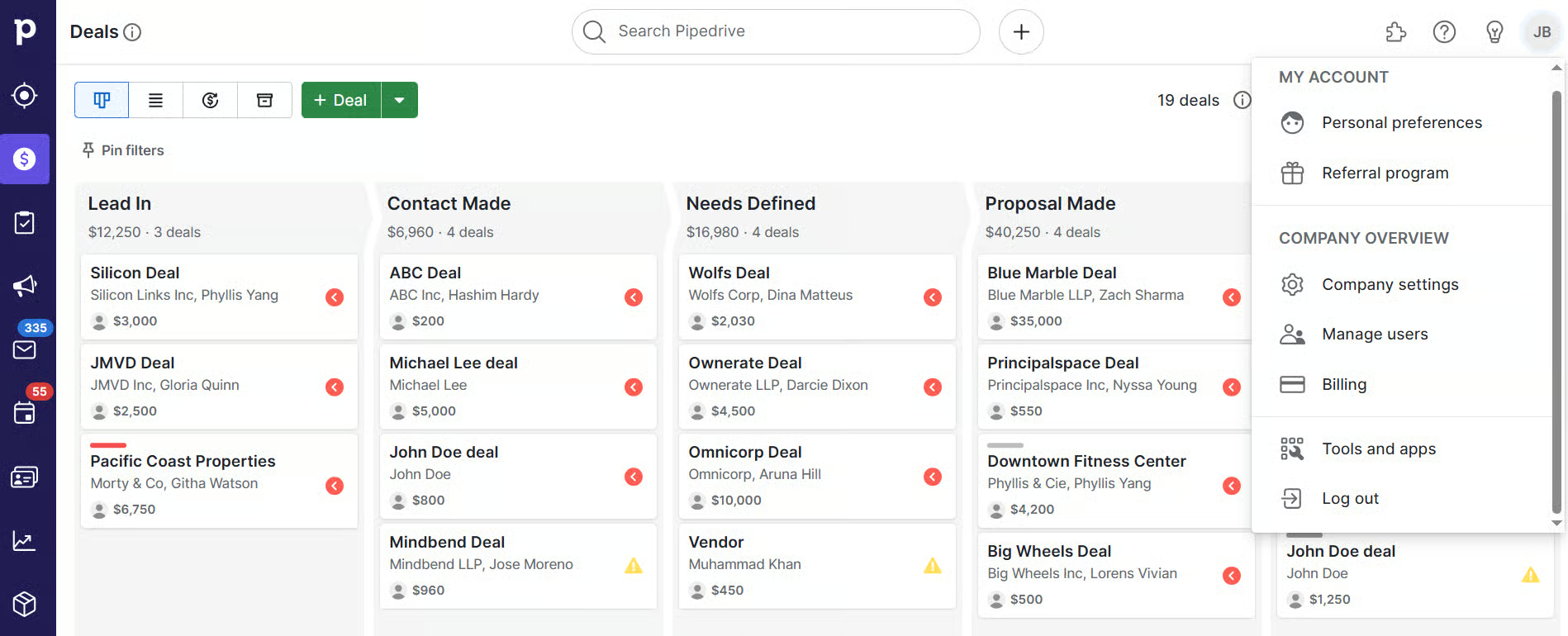
ㅤ Pipedrive was designed to support the daily work of sales teams. The platform organizes all commercial activity around the pipeline, allowing you to visually track each deal and its status.
This structure makes it easier to understand which opportunities are being negotiated, which require immediate follow-up, and where there are potential roadblocks in the sales process. In contrast, HubSpot CRM integrates sales into a broader ecosystem, including marketing, support, and content. While useful for some organizations, it can become more complex to use when the main focus is pipeline management.
Usability and adoption by the team
One of the main factors in choosing a CRM is team adoption. No matter how complete the platform is, if it's not used consistently, it loses value.
ㅤ Pipedrive stands out for its simple interface. Creating deals, updating statuses, registering contacts, or viewing activities is quick and intuitive, without the need to navigate through multiple menus.
This feature reduces training time and increases the likelihood of the team using the CRM consistently, which is crucial in contexts where time is a scarce resource.
Pipedrive vs HubSpot: Essential features without excessive complexity
Pipedrive offers key features for sales management, including:
- Customizable pipelines
- Contact and organization management
- Automation of tasks and activities
- Adaptable reports and dashboards
These features meet the needs of most sales teams without introducing additional layers that don't add value. On the other hand, HubSpot distributes many features across different hubs, which can complicate initial setup and require more advanced paid plans.
Pipedrive pricing: transparency and predictability
The topic of Pipedrive pricing is frequently raised when evaluating this platform, especially for growing companies.
Pipedrive offers clear paid plans with access to essential features from the start, providing a transparent view of the necessary investment. HubSpot offers a free plan, but with significant limitations. As the need for automation or more advanced reporting arises, HubSpot's costs increase considerably.
Integrations and Pipedrive API
The Pipedrive API allows you to integrate your CRM with invoicing systems, marketing platforms, support tools, or internal solutions. The Pipedrive marketplace also offers several ready-to-use integrations, making the platform flexible for companies of different sizes and technology ecosystems.
Pipedrive vs HubSpot: Scalability
Pipedrive allows you to create multiple pipelines, adapt steps to different types of business, and adjust fields and reports as the operation grows. This scalability is progressive and does not require frequent restructuring, keeping the team agile and productive.
At HubSpot, scalability often involves activating new hubs or plans, which can imply significant changes in how we work.
Migration and continuity
For companies using a different CRM, Pipedrive provides import tools that preserve contact history, deals, and activities, ensuring the team can continue working during the transition.
Why choose Pipedrive?
The choice between Pipedrive and HubSpot depends on the company's context and priorities. For organizations that value a sales-focused CRM that is easy to use, has predictable costs, and offers customization capabilities, the latter is the better option. Pipedrive is a consistent option.
Pipedrive CRM focuses on what really matters to sales teams: pipeline visibility, opportunity control, and efficient sales process management, resulting in greater productivity and more consistent results.
For more information or to request your free demonstration, talk to us.